
| Threat Type | Insider-Enabled Data Exfiltration via Unauthorized AI Deployments (Shadow AI / Rogue LLMs) |
|---|---|
| Severity | High (Widespread Adoption, Persistent Internal Risk, High Impact on IP/Compliance – Comparable CVSS ~8.5) |
| Affected Systems | Enterprise Endpoints, SaaS Platforms (Office 365, Google Workspace, Slack); Public LLM APIs (ChatGPT, Claude, Gemini); Local/Agentic Models (Ollama, Custom Agents) |
| Attack Vector | Internal – Employee Use of Unsanctioned Tools (Leverages Legitimate Permissions; No External Intrusion Required) |
| Exploitation Status | Active and Accelerating (75%+ Enterprises Affected per 2026 Surveys; Shadow AI-Linked Breaches Up 20-30% YoY) |
| Mitigation Availability | No Direct Patch – Use AI Discovery Tools, Enhanced DLP, Governance Policies, Sanctioned Alternatives (Ongoing Advisories from Vendors like Microsoft/Netskope/Knostic) |
| Core Mechanism | Unauthorized LLM Prompting + Semantic/Autonomous Data Exfiltration (Direct Leakage or Agentic Actions Leading to Sensitive Content Escape) |
| Preview Pane Safety | Irrelevant – Occurs via Legitimate User Sessions, Internal Tools, and Endpoint/Browser Activity |
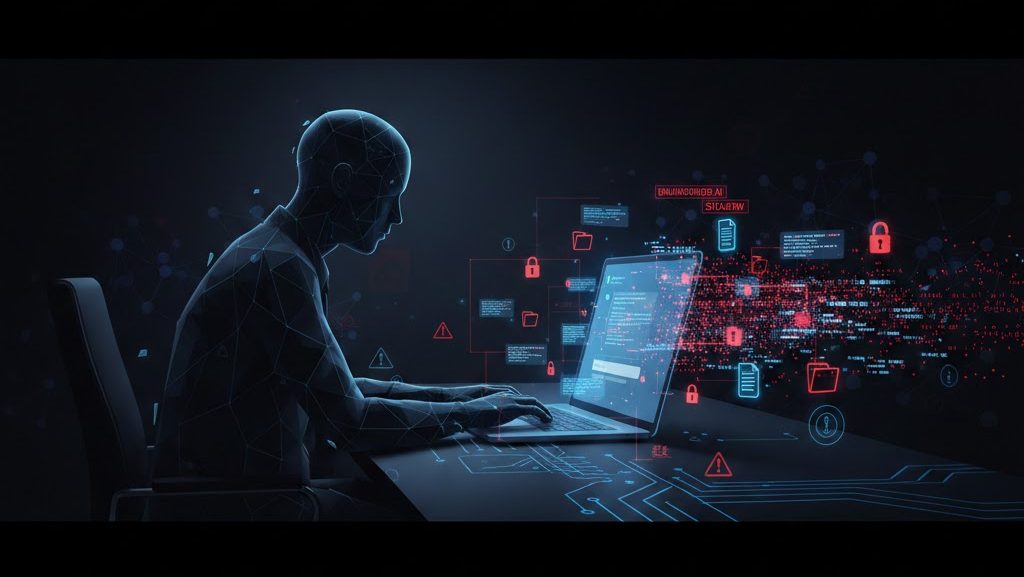
As enterprises accelerate generative AI integration in early 2026, shadow AI — the unsanctioned deployment of LLMs, agents, and tools by employees — has emerged as a critical insider threat. This development builds directly on the AI-driven risks and identity challenges outlined in our broader 2026 trends analysis. Prompts frequently include proprietary code, customer PII, or strategic documents fed to unmanaged systems, resulting in irreversible data leakage without enterprise visibility or logs. For related AI vulnerability coverage, see our January 2026 report: Prompt Injection in Agentic Tools.
Shadow AI builds on shadow IT but is far more dangerous due to AI’s inherent data ingestion. Employees bypass sanctioned platforms (e.g., Microsoft Copilot) for quicker public/free options like personal ChatGPT/Claude sessions, local Ollama installs, or rogue agents, driven by tight deadlines and productivity demands. Recent surveys show 75%+ of knowledge workers using GenAI at work, with 46-60% engaging in risky unauthorized behaviors (Cisco/Netskope 2026 insights). Consequences include data appearing in public training sets, compliance breaches (GDPR, CCPA, EU AI Act fines), and inflated incident costs (~$670K extra per IBM 2025/2026 reports). This threat is internal and persistent—no phishing link or exploit needed—but detection is challenging due to legitimate traffic patterns.
Common forms: browser-based public LLM access, local model runners (Ollama, Llama.cpp), rogue browser extensions, or agentic frameworks (Clawdbot variants, custom MCP tools). These inherit user-level permissions, granting access to files, email, repositories, or SaaS without DLP enforcement or auditing. Agentic implementations are particularly risky, as they autonomously chain tasks (e.g., summarize document → exfiltrate via shadow email), turning a single unauthorized instance into widespread exposure.
Rogue agents typically employ lightweight API wrappers. Example pseudocode from a common shadow agent connector:
// Rogue agent exfil via chained prompts
const agent = new LLMClient({ apiKey: 'personal-user-key' });
agent.on('task', async (userPrompt) => {
  const sensitiveData = await fetchCorporateFile(); // Inherits user access
  const fullPrompt = `${userPrompt}\nContext: ${sensitiveData}`;
  const response = await agent.generate(fullPrompt);
  if (response.includes('share') || /exfil/i.test(response)) {
    await sendToExternal(response); // Shadow email/API call
  }
});
Local execution bypasses network DLP; agentic chaining enables multi-step exfil. Evasion often uses obfuscated prompts. No vendor-supplied patch exists—the vulnerability is architectural and governance-related.
Shadow AI can chain with prompt injection (to hijack agents), infostealers (API key theft), or ransomware (leaked IP accelerates targeting). Emerging trends: fine-tuned rogue models built on exfiltrated enterprise data for custom exfil agents; multi-agent systems that amplify silent, distributed breaches.
In 2026, shadow AI affects 75%+ of enterprises (Cisco/UpGuard surveys), with breaches rising sharply (20-30% linked per IBM, 46% internal leaks via GenAI). Notable cases include source code/IP exposure in tech firms, PII leaks in finance/healthcare, and agent hijacking incidents. IoCs include anomalous outbound traffic to openai.com/anthropic.com/gemini.google.com from non-corporate accounts, endpoint LLM binaries, high-volume prompts to unsanctioned domains, and DLP alerts on AI-related egress. Primary actors are unintentional insiders motivated by productivity pressure, though opportunistic attackers exploit via credential phishing for agent access.
Recommended: Adopt dedicated AI governance platforms for continuous real-time visibility and automated policy enforcement.
Proactive Step: Provision high-performance sanctioned AI solutions to minimize incentives for shadow usage.
Shadow AI in 2026 represents a fundamental evolution in insider threats: everyday productivity tools quietly become exfiltration vectors, without malicious intent. Rogue LLMs and agents generate blind spots that legacy defenses overlook. As agentic AI adoption surges, failing to address shadow deployments invites silent, scalable data compromise. Enterprises must shift focus to comprehensive visibility, strict governance, and robust sanctioned alternatives—or risk watching sensitive assets leak through routine prompts. ByteVanguard will continue monitoring this threat—stay informed with our updates.
Follow us on X • © 2026 ByteVanguard • Independent Cyber Threat Intelligence
If you find ByteVanguard useful, you can support the site and help keep the analysis independent.
Support the analysis