

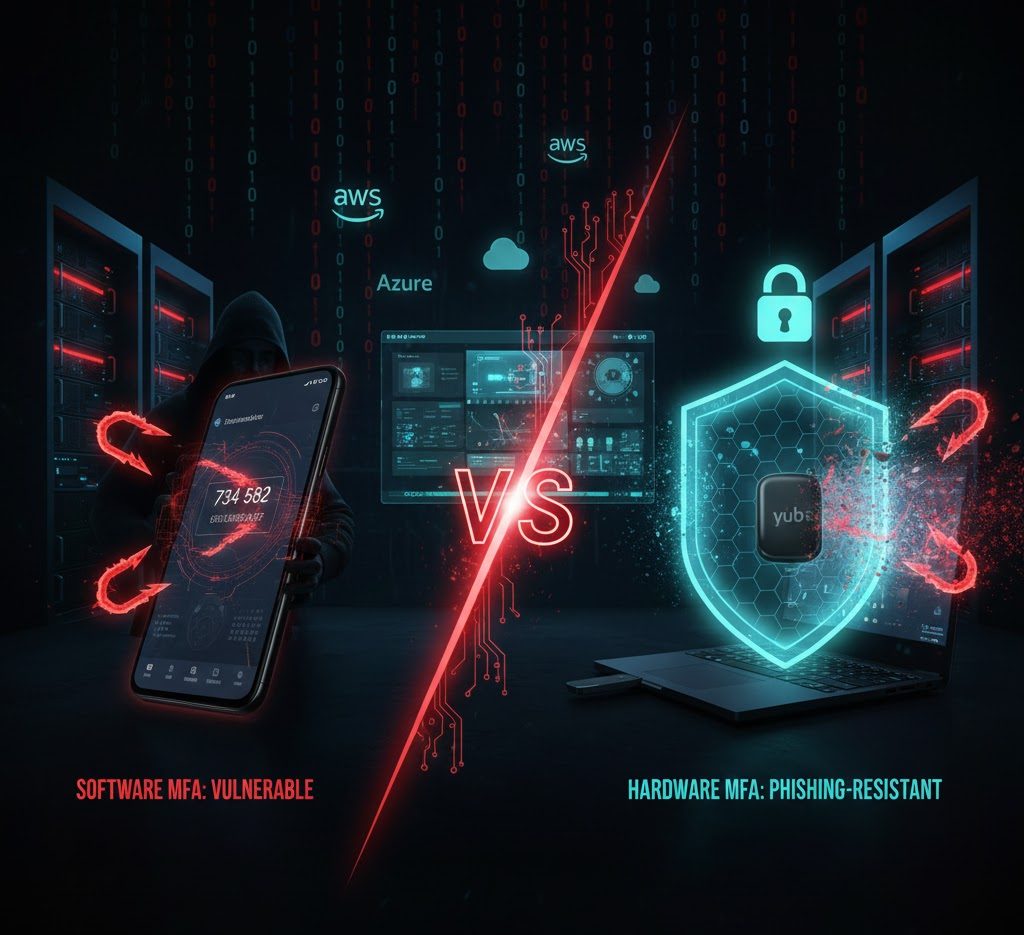
The Cybersecurity and Infrastructure Security Agency (CISA) has issued strong guidance urging organizations to adopt phishing-resistant multi-factor authentication (MFA) as the gold standard for protection. While traditional MFA methods like TOTP apps, push notifications, and SMS are better than passwords alone, they remain vulnerable to phishing, MFA fatigue, and interception attacks. In contrast, phishing-resistant MFA—primarily FIDO2 hardware security keys and PKI-based solutions—uses public-key cryptography to bind authentication to the legitimate domain, making bypass impossible. CISA recommends immediate prioritization of this technology for administrators and high-value accounts to align with Zero Trust principles and dramatically reduce credential compromise risks.
Traditional MFA methods are increasingly bypassed in targeted attacks. Real-time phishing relays codes from fake login pages, MFA fatigue bombards users with push approvals until one is accepted, and SIM-swapping or SS7 exploits defeat SMS/voice codes. High-profile breaches at well-defended organizations prove these weaknesses are actively exploited.
Phishing-resistant MFA eliminates these vectors by design. FIDO2/WebAuthn security keys store private keys on a secure hardware chip that never leaves the device, requiring physical touch and generating signatures valid only for the authentic domain. PKI-based smart cards provide similar hardware isolation. CISA highlights FIDO2 as the most accessible and effective option, with number-matching push notifications serving as a temporary bridge during transition.
CISA strongly urges all organizations to implement phishing-resistant MFA as part of applying Zero Trust principles. Phishing-resistant MFA is the gold standard and organizations should make migrating to it a high priority effort. Cybersecurity and Infrastructure Security Agency (CISA)
Read the full CISA fact sheet and related guidance here:
https://www.cisa.gov/sites/default/files/publications/fact-sheet-implementing-phishing-resistant-mfa-508c.pdf
https://www.cisa.gov/news-events/news/phishing-resistant-mfa-key-peace-mind
https://www.cisa.gov/MFA
If you find ByteVanguard useful, you can support the site and help keep the analysis independent.
Support the analysis