

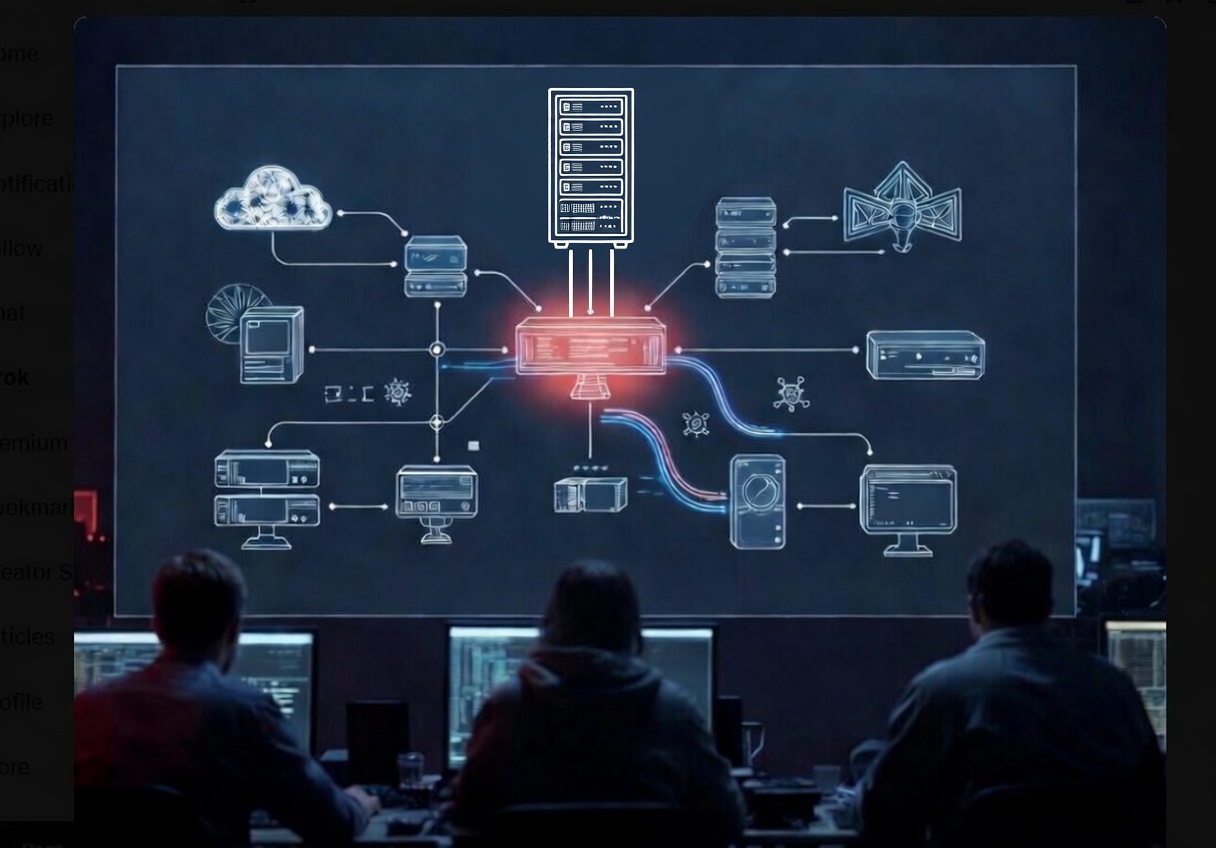
CISA has added CVE-2026-20182 to its Known Exploited Vulnerabilities catalog, confirming that Cisco’s critical Catalyst SD-WAN flaw is already being used in the wild.
The issue is serious not only because of its CVSS 10.0 score, but because it affects the trust process that allows SD-WAN controllers and managers to recognize legitimate network peers. In other words, this is not just another vulnerable service. It sits inside the infrastructure layer that helps decide which systems belong in the SD-WAN fabric.
That makes the flaw especially important for defenders. A successful attack may move beyond one device and into the routing, policy, and configuration layer that supports branches, cloud services, and enterprise network traffic.
| Vulnerability | CVE-2026-20182 |
|---|---|
| Affected Products | Cisco Catalyst SD-WAN Controller, formerly vSmart, and Cisco Catalyst SD-WAN Manager, formerly vManage |
| Severity | Critical — CVSS 10.0 |
| Attack Type | Unauthenticated remote authentication bypass |
| Affected Service | vdaemon over DTLS on UDP port 12346 |
| Known Exploitation | Confirmed; added to CISA KEV on May 14, 2026 |
| Primary Risk | Unauthorized access to SD-WAN trust, routing, and configuration functions, including NETCONF-based changes |
CVE-2026-20182 affects Cisco Catalyst SD-WAN Controller and Cisco Catalyst SD-WAN Manager. Cisco disclosed the vulnerability on May 14, 2026, and CISA added it to the KEV catalog the same day after active exploitation was confirmed.
The flaw is not in a normal user login page or a public web dashboard. It sits in the SD-WAN peering process, where network components decide whether another system should be trusted as a valid participant in the fabric.
That distinction matters. A login bypass on a single application is already serious. A trust failure in SD-WAN infrastructure can be more consequential because the affected system helps coordinate traffic, routing, and policy across many connected sites.
The vulnerability is in the peering authentication process used by Cisco Catalyst SD-WAN components. According to Rapid7, the affected service is vdaemon, which communicates over DTLS on UDP port 12346. This is the service used for SD-WAN peering, not a web-based management interface.
The weakness is not a weak password, not a default credential, and not an administrator exposing a dashboard by mistake. It is a logic failure in the way the system decides whether another SD-WAN component should be trusted as a legitimate peer.
A remote unauthenticated attacker can send crafted requests to an affected system and cause the controller to treat the attacker as an authenticated peer. From that position, the attacker may be able to perform privileged operations, including adding an attacker-controlled SSH public key to the vmanage-admin account and then accessing NETCONF over SSH.
A critical vulnerability on a single server is serious. A critical vulnerability in SD-WAN infrastructure is different. The controller is not just another host on the network; it is part of the system that helps the overlay fabric communicate, route traffic, enforce policy, and decide which peers should be trusted.
That is why this class of vulnerability is so dangerous. Successful exploitation does not merely provide access to one box. It can create a trusted position inside the infrastructure layer that manages many downstream network edges.
Once an attacker is accepted as a trusted peer, the risk expands from device compromise to fabric-level manipulation. In practical terms, defenders should think about possible route manipulation, unauthorized configuration changes, suspicious peer relationships, and unauthorized SSH keys as part of the same incident picture.
Rapid7’s technical writeup describes the impact clearly: once the attacker can inject a public key into the vmanage-admin account, they can access NETCONF over TCP port 830 and begin issuing commands. That moves the attack from “authentication bypass” into a much more operationally dangerous category: infrastructure trust abuse.
The technical vulnerability is serious on its own. But the timeline is what makes this incident especially important for defenders.
| Timing | Event |
|---|---|
| February 2026 | Cisco disclosed CVE-2026-20127, another critical authentication bypass affecting Cisco Catalyst SD-WAN infrastructure. |
| Prior activity | Cisco Talos reported that the actor cluster tracked as UAT-8616 had been exploiting CVE-2026-20127 activity going back to at least 2023. |
| May 14, 2026 | Cisco disclosed CVE-2026-20182, a new critical flaw in the SD-WAN control connection handshaking process. |
| Same day | CISA added CVE-2026-20182 to the KEV catalog, confirming that the vulnerability was already known to be exploited. |
| May 2026 | Cisco Talos connected the new exploitation activity to UAT-8616, the same actor cluster associated with the earlier Cisco SD-WAN campaign. |
There are two reasonable ways to read this timeline. One is that the actor was already deeply focused on this exact attack surface and moved quickly once a new vulnerability became available. The other is that the actor may have had knowledge of the flaw before public disclosure. Cisco and Talos have not publicly confirmed which interpretation is correct.
Either way, the lesson is the same: when an attacker is already operating against a specific class of infrastructure, a new CVE in the same component does not behave like an isolated event. It becomes part of an active campaign surface.
Cisco Talos tracks this activity as UAT-8616 and assesses the cluster with high confidence as a highly sophisticated threat actor. Talos previously connected the actor to exploitation of CVE-2026-20127 and reported evidence of malicious activity going back to at least 2023.
For CVE-2026-20182, Talos reported that UAT-8616 attempted to add SSH keys, modify NETCONF configurations, and escalate to root privileges. That pattern matters because it shows interest not only in initial access, but in persistence and post-compromise control of SD-WAN infrastructure.
At this stage, the responsible framing is important. Public attribution is to a tracked activity cluster, not a fully named group or publicly attributed nation-state actor. That still matters. UAT-8616 has already demonstrated repeat interest in Cisco SD-WAN infrastructure, unauthorized peer relationships, and post-compromise activity around network control systems.
This is part of a broader pattern ByteVanguard has been tracking: attackers continue to prioritize edge devices, remote access platforms, identity infrastructure, and network management systems because these technologies sit close to trust. They are often exposed, privileged, difficult to monitor, and operationally painful to patch.
This is not a vulnerability to place into a normal patch queue. If affected Cisco Catalyst SD-WAN components exist in the environment, defenders should treat the issue as an urgent infrastructure security event.
Identify all Cisco Catalyst SD-WAN Controller and Manager instances. Confirm software versions and compare them against Cisco’s advisory for CVE-2026-20182.
Cisco has not published a configuration-only workaround that fully addresses the vulnerability. Upgrade affected systems to fixed releases as soon as possible.
The affected DTLS peering service uses UDP port 12346. This port should not be broadly internet-reachable. Verify perimeter rules, segmentation, firewall policy, and access paths.
Run Cisco’s recommended control-connection checks and validate peer relationships against known inventory, expected sites, device roles, and maintenance windows. Investigate unfamiliar peer connections, unusual timestamps, inconsistent device types, or unexplained network changes.
Review the vmanage-admin account for unauthorized entries. This matters because Rapid7 demonstrated public-key injection as part of the attack path.
Investigate unexplained configuration changes, route policy changes, OMP route updates, TLOC table changes, and unusual administrative access. These may indicate that the vulnerability was used for more than initial access.
Cisco recommends collecting forensic baseline material from affected control components. If compromise is suspected, open a Cisco TAC case and include CVE-2026-20182 in the title.
CVE-2026-20182 is distinct from CVE-2026-20127. Environments patched for the earlier Cisco SD-WAN flaw may still need urgent remediation for this new issue.
CVE-2026-20182 is another reminder that KEV is not just a vulnerability list. For defenders, it is increasingly an operational timer. Once a flaw lands in CISA KEV, the question is no longer whether exploitation is possible. The question is whether your environment has already been touched, scanned, or prepared for follow-on activity.
That is especially true for edge and network infrastructure. These systems are high-value because they sit at the intersection of connectivity, trust, and administration. A vulnerability in this layer can give attackers a path that is much more valuable than ordinary server access.
This also reinforces a point from ByteVanguard’s recent coverage of AI agents and KEV: the modern exploitation window is shrinking. Defenders cannot rely on long patch cycles when attackers are already focused on the affected technology, already understand the component, and already have infrastructure or tooling pointed at the same surface.
ByteVanguard tracks CISA KEV activity, exploited vulnerabilities, AI security, and enterprise threat intelligence. Subscribe for weekly briefings.
If you find ByteVanguard useful, you can support the site and help keep the analysis independent.
Support the analysis